Legacy: What Will You Leave? What Will You Create?
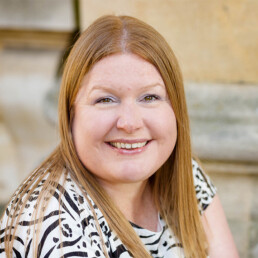
Hannah Wilson
Blog originally published here.

I often reflect on our legacy as teachers, educational leaders but also as human beings. Not that I am morbid, but I do sometimes consider what will be written about me in my obituary and what will be written on my gravestone. It is a good reality check when we get lost in our roles as I will not let it be “she was a hard worker”.
I think it is a great question to ask candidates at interview:
- What would your legacy be if/when you leave your current role/ school?
- What could your legacy be if you joined us and moved on in the future?
I am really proud of the legacy I have created in previous roles where I have set up departments, coached/ mentored staff at all levels of their careers to be the best version of themselves, curated whole school events in schools were the performing arts were not valued, set up federation wide networks and projects like a MAT wide choir. Reading the Ofsted report of the school where I was Vice Principal I can see the work I did to co-lead the school from Inadequate to Outstanding, despite not being there for the inspection. As a headteacher of a start up school everything is our legacy, but we are also conscious that as we move on things will change, but what will remain? Changes in working practice such as flexible working, co-leadership models and part time leadership models I hope will be part of my legacy.
As a founding team of 2 new schools we are conscious that we are constantly sowing seeds for the future. Some days it can be frustrating that we are still nurturing shoots planted last year as it has been a long hard slog and it feels like we should see more growth, but we must remind ourselves we are only 2 terms (8 months) old at the primary and still only 1 year and 2 terms (20 months) old at the secondary. Some days we are trying to run before we can walk.
If you compare our early development as schools to that of a developing child it is a refreshing reality check about our expectations of our team, our community, our students.
An 8 month old’s development:
A whole new world of adventure is beginning to open up for your baby. Many babies start learning to crawl at this age. There will be many bumps and falls as your baby becomes more mobile, but you can help make things safe by child-proofing your home. Your baby may start to become shy of strangers, or cry if you leave him with a babysitter. This is the beginning of separation anxiety. In time he will learn that leaving him doesn’t mean that you won’t come back.
A 20 month old’s development:
Your 20 month old may be able to run, though it’ll take all his concentration, and he’ll probably still be a little unsteady. He may also go upstairs by himself, though he’s likely to need your help on the way down. Chances are, playtime is becoming even more fun as he learns new skills such as kicking and throwing. Toddlers are naturally curious about everything, including their genitals. Just as your toddler played with his fingers and toes when he was younger, he may begin to play with his genitals now. It’s completely natural, and isn’t a cause for concern unless it’s happening constantly.
We have to remember that we will not always witness our legacy whilst we are in post. This can be hard to accept. On our tough days, and there have been many this term, when our values and our resilience are being compromised, we have to pause and remind ourselves that our ripple effect of change is not immediate.
As a values-led school with a holistic approach, we are affecting change, but it is a slow change. The change can feel painfully slow as we take 1 small step forward and 2 large steps back most weeks. We need to hold on to and stay focused on the longer term attitudinal and behavioural change that will be a generational legacy. We need to appreciate that we may not see the fruits of our labour whilst we are at the Aureus Schools. It is our young people as they reach adulthood who will lead the change. Our young people are empassioned global citizens who will be the change.

Our community can be challenging, the issues our children and families face are well-masked behind our new build estates. The wider perception of Oxfordshire is warped compared to the reality. Many of our peers from previous, mainly urban schools, are not aware of the level of trauma we deal with on a daily basis. Everyone assumes it is only in urban environments that certain issues are experienced. As a school we have done a lot of training on mental health, wellbeing and Adverse Childhood Experiences. We have done wider reading on Compassionate Fatigue as the trauma our children have experienced takes it toll on our team in how it manifests itself. Our safeguarding team all have supervision as we are being over exposed to number of cases that could affect our own emotional wellbeing.
Bennie’s blog about tackling racism, does not dwell on the level of prejudice we deal with on a daily basis. The prejudice – racism, sexism, misogyny and homophobia – we tackle day in and day out. The anti-social behaviour in the community which is increasing, will challenge us further as our students become teenagers. Working closely with the local police has been a positive step forwards. We need to break some of the cycles but know that we cannot do it alone – we need a system wide, societal change to sustain it.
With our school system and our society struggling to survive in the complex and fractured landscape we find ourselves in, now more than ever before, we need to focus on the difference we can make. The culture and ethos at both of our schools is based on our shared vision and values, underpinned by relationships.
Our legacy might not be tangible, nor visible, yet, but we know we are making a difference and creating a different kind of legacy. A legacy that we will not see with our own eyes perhaps.
Wisdom from Legacy, James Kerr:
Mā te rongo, ka mohiō;
Mā te mohiō, ka mārama;
Mā te mārama, ka mātau;
Mā te mātau, ka ora.
From listening comes knowledge;
From knowledge comes understanding;
From understanding comes wisdom;
From wisdom comes well-being.

Is Vulnerability the New Hero Leadership?
Hannah Wilson
Blog originally published here.
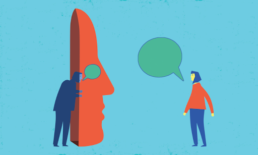
Invited to contribute to one of The Big Education’s ‘Big Conversations’ I was excited to join a stellar line up including Sir Tim Brighouse, Karen Giles and Nadine Bernard. Each speaker contributed a perspective on leadership which we all agreed should be underpinned by values, integrity and authenticity. However, we realised that in order to talk with conviction about vulnerability it felt appropriate to reveal some of our own vulnerabilities, both professionally and personally, so that the audience may learn from our reflections on our career experiences and indeed mistakes we had made along the way.
So, my musings began: Is vulnerability a new thing? Indeed, it is not. Is it a new thing when we are looking at leadership? Perhaps it is. How does it relate to hero leadership? Well, this is where it gets interesting in my eyes – if we review the dominant narrative and imagery of leadership, it is depicted as acts of heroism, as an effective leader being a strong leader, and often through a gender stereotyped lens too.
When you start searching for vulnerability definitions and quotations some common ideas begin to take shape which encompass elements of uncertainty, risk and emotional exposure. An expert in the field of vulnerability is Positive Psychologist Brene Brown who has written a number of books and delivered a TED talk on why we need to embrace it.
“Vulnerability is at the core, the centre, of meaningful human experiences”. (Brown)
Thus as schools are people-centred, and the ultimate success of a school is based on the quality of the relationships nurtured between the people the school serves and those who are serving them, then the messiness of the human existence and the rawness of human vulnerability is at the core of education.
As school leaders we work with increasingly vulnerable communities. We are under daily pressure to meet the needs of the children in our care, their families and the wider community. As a headteacher I was acutely aware of the emotional labour my team were weighed down with as we safeguarded our school community. As a school we decided to put mental health and wellbeing at the centre of our curriculum and our decision making as a school, which elevated the initiatives we committed to such as our art therapy, thrive and nurture programmes.
Alongside the needs of our students, we also needed to meet the needs of our vulnerable staff. As a school who was prepared to do things differently to strive for a different outcome, our hope and optimism attracted staff who were looking for solutions, staff who wanted to stay in the system but who were feeling forced out. A school is often a safe haven, a place of security and stability, a place of belonging and visibility, a place of diversity and inclusion. In her work on silence and speaking out, Audrey Lourde suggests “that visibility which makes us most vulnerable is that which also is the source of our greatest strength”. (Lourde, 2017)
“Vulnerability sounds like truth and feels like courage. Truth and courage aren’t always comfortable, but they are never weakness”. (Brown, Daring Greatly , 2015)
It has become more and more apparent that some schools are more vulnerable than others to work in. Schools serving the disadvantaged communities, coastal schools and schools with poor inspection outcomes often become SNOW schools (schools no one wants) which are then often academized and (re) brokered into trusts to fix.
In our current school system we equally find that school teachers and school leaders are finding themselves in increasingly vulnerable roles. The ‘glass ceiling’ for women leaders in the school system has been a high-profile topic of debate for the last five years since we started #WomenEd a grassroots gender equality movement. With the arrival of our sibling #BAMEed, our reflections and discussions moved from the ‘glass’ ceilings to ‘concrete’ ceilings as we scrutinised the data of the demographic breakdown of our teachers and leaders versus our students. In an increasingly diverse country, with nearly one quarter of children in our primary schools representing a range of different cultures we have a disconnect when the number of BAME teachers is significantly lower than this and the number of BAME school leaders represent a marginal percentage. With national initiatives to increase the number of women and BAME headteachers, we need to ensure that they are recruited to roles which are well-supported and do not end up in roles which are ‘glass cliffs’, those roles which are isolated, unstable and unsupported. Vulnerable demographic groups ending up in vulnerable roles in vulnerable schools is problematic for our workforce data as the narrative then becomes warped about who the ‘heroes’ in the system are.
“Vulnerability is not winning or losing; it’s having the courage to show up and be seen when we have no control over the outcome. Vulnerability is not weakness; it’s our greatest measure of courage”. (Brown, Rising Strong, 2015)
We also find ourselves in an era where we are struggling to recruit and retain teachers, but equally where we have a high attrition rate and mobility of headteachers. There is an emerging narrative of headteachers speaking out about the vulnerability of their role. James Pope, the former Headteacher who featured on the ‘School’ television documentary has started a campaign and series of events to support school leaders who are casualties of the system. With the corporatisation of our education system, the HR processes and systems in schools are becoming increasingly business like. The language of ‘NDA’s, ‘Gagging Orders’, ‘Pay Offs’ and ‘Gardening Leave’ is now commonplace.
As I prepared my speech, listened to the other speakers, reflected on the topic and discussed it with others in the room my final thoughts are: is there a difference to being vulnerable and feeling vulnerable as a school leader? Do we thereby need to learn from and embrace these facets in different ways?
“Daring greatly means the courage to be vulnerable. It means to show up and be seen. To ask for what you need. To talk about how you’re feeling. To have the hard conversations”. (Brown, Daring Greatly , 2015)
To embrace our vulnerability we are encouraged to: find the courage to be seen; ask for what we need; accept the imperfect; show compassion to self and others; talk about how we are feeling; be authentic; be prepared to take risks; own our stories. A great piece of advice I once received stated that: maybe life isn’t about avoiding the bruises, maybe it’s about collecting the scars to prove we showed up for it. This resonated with me and my philosophy of character education, growth mindset and learning from mistakes, as a fear of failure can inhibit our potential. In order for us to be ‘innovative, creative and agents of change’ we need to lean into our vulnerability. (Brown, Daring Greatly , 2015)
Hannah Wilson
Former Executive Headteacher, Co-Founder of #WomenEd and Head of Secondary Teacher Training
References
Brown, B. (2015). Daring Greatly . New York: Penguin.
Brown, B. (2015). Rising Strong . New York: Penguin.
Brown, B. (n.d.). The Power of Vulnerability. TED Talk.
Lourde, A. (2017). Your Silence Will Not Protect You. Silver Press.
Fragility
Hannah Wilson
Blog originally published here.
Fragility: noun. the quality of being easily broken or damaged; the quality of being easily harmed or destroyed.
See my twitter thread on Fragility which led to this blog.
Life is fragile. The world is fragile. Humanity is fragile.
When I think of fragile things I think of bubbles, snowflakes, panes of glass, flowers, butterflies, glass baubles and dandelion clocks.
Fragile, delicate things. Things that break easily. Things that shatter.
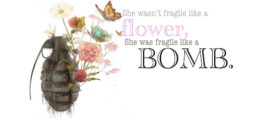
The universe has spoken in the last few months and reminded us of the fragility of our lives, our world and our humanity.
We have been reminded that we are not in control. We have been reminded that life is short. We have been reminded that we will all die one day.
I have always been afraid of death. I had nightmares as a child about it. I would wake myself up crying, scared of people around me dying.
As a 41 year old I have surprisingly never been to a funeral. I have attended just one memorial for a friend who died of cancer when we had just finished university. Her body succumbed to the illness on her third wave as it crept into her spinal cord.
Synonyms for fragile include brittle, breakable, flimsy, weak, frail, delicate and eggshell. For fragility we can interchange frailty, weakness, delicacy and vulnerability.
I sometimes wish we could wrap our loved ones up in cotton wool, put them in a bubble to protect them from harm.
Thinking about the calcified shell of an egg, I wonder about the scientific wonder of a brittle layer, holding life within. Protecting the inner contents from force, desiccation and danger.
Fragile things need to be guarded, they need to be treated with care. One careless touch can irrevocably damage that state of a delicate object.

But then we come to white fragility. A term that has become part of the common parlance in the #BlackLivesMatter narrative.
Unlike, the delicate, beautiful, fragile objects we need to preserve and protect, white fragility, to the converse does need shattering.
White Fragility: noun. discomfort and defensiveness on the part of a white person when confronted by information about racial inequality and injustice.
In 2011, Robin DiAngelo coined the term “white fragility” to describe the disbelieving defensiveness that white people exhibit when their ideas about race and racism are challenged—and particularly when they feel implicated in white supremacy.
I repeat: Life is fragile. The world is fragile. Humanity is fragile.
Yet, we have an issue. We seem to be more uncomfortable in being party to a conversation about racism, than we are about the act of racism itself.
All human lives are fragile, there is not a hierarchy of some lives being of more value than others. We live in the same world, but some parts are more fragile than others. Some inhabitants exist in more delicate and more fragile situations than others. Humanity is fragile, but there is a scale of fragility. We will all die, but we do not all fear death and danger, day in and day out.
We, as white people, need to educate ourselves on our whiteness. Words I am reading, seeing and hearing regularly that need unpacking:
White privilege: white skin privilege refers to societal privilege that benefits white people over non-white people in some societies, particularly if they are otherwise under the same social, political, or economic circumstances.
White supremacy: is the racist belief that white people are superior to people of other races and therefore should be dominant over them.
White power: a white supremacist slogan designed to mimic the “black power” slogan often used by African-Americans in the 1960s/70s. It is a commonly shouted at white supremacist events as a racist rallying cry.
White silence: white silence is experienced by members of the White culture who, during discussions of racial issues, experience negative emotions including guilt and anger. When these feelings are not addressed, Whites begin to resist certain content areas. This resistance takes on the form of White silence.
White allies: a white ally acknowledges the limits of her/his/their knowledge about other people’s experiences but doesn’t use that as a reason not to think and/or act. A white ally does not remain silent but confronts racism as it comes up daily, but also seeks to deconstruct it institutionally and live in a way that challenges systemic oppression, at the risk of experiencing some of that oppression. Being a white ally entails building relationships with both people of color, and also with white people in order to challenge them in their thinking about race. White allies don’t have it all figured out, but are committed to non-complacency.
White tears: The phrase has been used to gently tease white people who get upset at things they think threaten their white privilege. It’s been used to poke fun at white people who think that talking about race makes you a racist.
Whitesplain: ‘splain’ has since become an affix signifying a patronizing, condescending explanation, usually given by a person in a privileged position. Whitesplain, then, is when a white person explains a topic, often concerning matters of social justice or minority culture, in an overconfident, often inaccurate manner to people of color. (A new one I heard for the first time this week is: “PrivSplain“)
White panels: white people need to get better at seeing race, addressing it, and addressing our own complicity. Taking part in all-white panels – especially on a subject where race is central – simply isn’t good enough.
Other phrases that are showing up repeatedly that we also need to consider the significance and connotations of are: White pillars. White solidarity. White equilibrium. White racism. White progressives. White hostility. Colour Blindness.
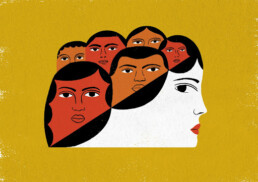
Why is it so hard for white people to talk about racism?
This is the question posed by academic Robin D’Angelo in her book “White Fragility”. Her research exposes racism in thought and action – it is a call for humility and vigilance.
“The problem with white people,” she says, “is that they just don’t listen. In my experience, day in and day out, most white people are absolutely not receptive to finding out their impact on other people. There is a refusal to know or see, or to listen or hear, or to validate.”
Robin D’Angelo
I have seen a lot of white people get very uncomfortable about what to do and what to say in the current context. Conversations about racism will cause discomfort and defensiveness. Our focus and attention should be on the discomfort of others, our defence should be of lives not egos.
We, as white people, need to get comfortable with being uncomfortable, that is how we listen, we learn and we progress.
We, as white people, need to stop being part of the problem, and we instead, need to start being part of the solution.
We, as white people, need to put our disbelief and sensitivity to one side and we need to be aware that we are complicit in society’s institutional racism.
Being silent is not enough. We need to be anti-racists rather than non-racists. We need to be active not passive in our commitment to ensuring that everyone is seen, everyone is heard, everyone is valued.
We have had a wake-up call, and we need to put our fragility to one side, and respond.
We need to check our privilege and we need to commit to being better, to doing better. One thing I am going to commit to continuing to do is calling out all-white line ups.
As women we have critiqued all male line ups at events, but as women now penetrate more panels and their voices are heard in more spaces, we need to make sure that white women are opening the door for brown and black women to step in and share that space. I am seeing too many influential white women in education accepting to speak at events where there is not diverse representation. This is not good enough.
We need to pop the bubble we exist in.
Brene Brown has started a campaign this week called #ShareTheMicNow to model how to do that. Please check it out.
Autonomy
Hannah Wilson
noun. the right or condition of self-government; (in Kantian moral philosophy) the capacity of an agent to act in accordance with objective morality rather than under the influence of desires.
In developmental psychology and moral, political, and bioethical philosophy, autonomy is the capacity to make an informed, uncoerced decision. Autonomous organisations or institutions are independent or self-governing.
I thrive in cultures which enable autonomy. I love being autonomous.
When I reflect on my roles over time I realise that my job satisfaction, my sense of fulfilment and my wellbeing were deeplf affected by how autonomous I could be in each role, in each organisation, in each context.
As an Assistant Principal, my Principal trusted me, he empowered me to be autonomous and I thrive. As a Vice Principal, my new Principal controlled us, he micro-managed me so we were disempowered. As a Headteacher I was initially quite autonomous, and then the Trust became more and more controlling, each line manager tried to rein me/ us in (also all men).
The tensions between my line manage, my employer and I have all stemmed back to my autonomy being restricted or removed. I wonder if perhaps my frustration also links back to the patriarchal power structures at play.
Our ability to be autonomous comes from our ability, our experience, our capacity, our confidence along with how we are trusted and how we are held to account. Our ability to enable and empower others to be autonomous relies on our trust and faith in them.
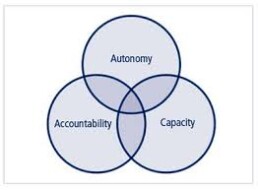
For me, autonomy is rooted in independence. It is fuelled by the need for freedom. It is framed through integrity.
Our schools do not enable and empower teachers and leaders to be autonomous. Our system conditions us to be compliant. Our society trains us to follow rules, to not be disruptive or rebellious.
Do we fear autonomy? Are we afraid of losing control?
“The 3 things that motivate creative people: autonomy, mastery and purpose”.
Daniel H.Pink
We go into teaching as our purpose, we deepen our understanding and polish our craft to become masters, as creative beings it is the autonomy or lack of that drives us out.
“Autonomy is different from independence. It means acting with choice”.
Daniel H. Pink
We enable and empower others, the children we serve, the teams we lead to be independent and to make choices. Being autonomous is also about owning those choices and the consequences that arise.
“Control leads to compliance: autonomy leads to engagement”.
Daniel H. Pink
We seek to self-manage and to self-regulate, we strive to enable others to do the same. When we relinquish control, when we release the need for compliance, autonomy increases and engagement thrives.
“Alignment enables autonomy”.
Henrik Kniberg
After 18 years of working in the system, I have taken the leap of faith to work independently. I am now truly autonomous. My purpose, my passion and my gifts are in alignment as my intentions, my practice and my autonomy are brought to life – they are working in synergy with one another.
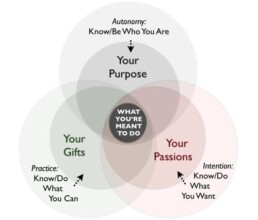
I know who I am, I know what I want to do and I know what I can do. I know that I am doing what I am mean to do because I am happy, content, stress-free. I feel purposeful, passionate and fulfilled.
What I didn’t realise when I made that leap of faith was that I had already wings – I had built them over time. As I jumped from the cliff and left security, stability and safety behind me, my wings have enabled me to transform into the autonomous being I have also needed to be. I make informed uncoerced decisions, I am independent and self-governing. I am empowered in my autonomy.

Choices
Hannah Wilson
noun. an act of choosing between two or more possibilities.
Following my 3 day weekend being trained to coach my clients for Fulfillment in early January, we spent another intense 3 days exploring how to coach for Balance. This is where the theme of Choices emerged from.
A lot of people say they want more balance in their lives. What we usually want is to feel that we are choosing our lives, not just reacting to them. Balance coaching is a way to guide people into making powerful life choices and actively manifesting the experiences they want most. Balance coaching makes us active participants in how we experience our lives.
Balance coaching is thus designed to create flow, restore alignment, and regain control of life. When conversations focus on what we have control over and what choices are possible, we help people gain new perspectives. This training weekend gave us the tools to empower our clients to define and pursue the experiences they want most, resulting in action that is alive, effective, and empowered.
Some of the coaching tools we developed and experimented with included: making resonant choices, building new perspectives, forwarding the action, being in flow, creating self-affirmations.
Ultimately, we are our choices. Below are a few of the quotes that remind me this:
“Life is a matter of choices, and every choice you make makes you”.
John Maxwell
“No matter what the situation, remind yourself, ‘ I have a choice’ “.
Deepak Chopra
“The 3 Cs of life: Choices, Chances and Changes. You must make a choice to take a chance or your life will never change”.
Zig Ziglar
As we unpacked the power of choice I began to make links between my CTI coaching training and some coaching training I had completed a few years ago, when I first left headship and transitioned into working independently, to become a Resilient Leaders Element consultant coach.
The RLE coaching framework which the Co-Founders Dr Jeremy Mead and Rachel McGill have co-created and shaped over a decade of people development really resonated with me when my friend Julie Rees introduced me to it. The self-assessment you do before you start your coaching relationship gives you a visual representation of how you see yourself across the 4 elements (Clarity of Direction, Awareness, Leadership Presence and Resilient Decision-Making) which are each underpinned by 3 facets. Later in the journey you also seek peer feedback and you can then compare how you see yourself to how you are seen by others.
In RLE resilient decision-making is broken down into our ability to make different decisions, in different ways, at different times:
- Creative decision-making – the ability to work outside of the usual frame of reference and take a valuable idea from concept to reality.
- Robust decision-making – combining intellectual rigour, evaluation and awareness, giving solid foundations and contingency planning.
- Versatile decision-making – creating options, responding to the needs and urgency of the situation, thinking and operating at the appropriate level.
The Impact
“Great decisions are made at the right time, with the right people, in the right place. Contingency options are always available so that the unexpected can be dealt with effectively and confidently”.
Completing my RLE accreditation during lockdown and at such a pivotal transition point in both my career and in my life, helped me anchor who I am and what I do, but it also helped me to forward the action as it gave me a framework to apply to myself and my emerging business:
- I had to be creative in my decision-making as I had to unlearn how institutionalised I was after 20 years of working in the system, I was also creating a new business from scratch and going through a rebranding process as a Leadership Development Consultant, Coach and Trainer.
- I had to be robust in my decision-making as I needed to make a living. It is scary going from financial security and job stability, when you venture into the unknown. I made the decision to take in a lodger for 6 months, just in case I did not make enough in my first few months to cover my mortgage.
- I had to be versatile in my decision-making as we unexpectedly found ourselves in a global pandemic and were thrown into working remotely. For many of my peers this was a major challenge as they had to flip their offer into a virtual one, I started my business at this time so embraced this new way of working and established it as the norm.
I spent a focused 6 months building my business and crafting my training and coaching offer for my network. I didn’t expect, nor intend, to be repeating this process 6 months later. But in the wake of George Floyd’s murder and the social justice activism my network made requests of me around formalising Diverse Educators and increasing our support/ training offer for schools.
My creative decision-making kicked in as we created a second website, my versatile decision-making was activated as I flexed my offer, and my robust decision-making grounded me as I sought partners to fund some of this collective project as I had invested what savings I had in the earlier process. So I made a choice to have two websites, two newsletters and two sides to my offer.
Although my work in leadership, coaching and training is clearly aligned and crosses over to the diversity, equity and inclusion community I am growing, I needed to separate the individual versus the collective offer.
Throughout this career and life transition, I was coached and supported by those around me. We regularly talked out the power of saying Yes and the power of saying No. I reflected on who and what I was saying Yes and No to as I realigned my purpose and streamlined my passion into working independently. This quote by Paulo Coelho is one of my favourites and one I regularly use in coaching and training sessions.
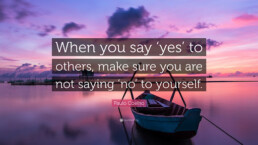
I use it whenever I fall into the dilemma of wanting to choose to say Yes to every opportunity that comes to me as so much is resonant and vision/ mission/ values-aligned, but I need to remind myself that each choice is active and each time I say Yes to someone else I am saying No to myself. I need to consistently make choices about Who I Am, alongside the What I Do.
Empowerment
Hannah Wilson
noun. authority or power given to someone to do something; the process of becoming stronger and more confident, especially in controlling one’s life and claiming one’s rights.
To empower. To be self-empowered. To empower others.
Your Strength
For me self-empowerment is rooted in our inner strength. The strength we have at our core – our inner reserves of resilience propel us forwards.
Being self-empowered is also about being self-sufficient and having self-efficacy.
It is self-empowering to face challenges head on, to rise to the challenge.
“A strong woman looks a challenge in the eye and gives it a wink”.
Gina Carey
It is also self-empowering to reflect on everything we have overcome. Our journeys, our struggles make us stronger.
I feel self-empowered when I reflect on the battles I have won, the obstacles I have navigated and the barriers I have climbed over.
“There is nothing stronger than a broken woman who has rebuilt herself”.
Hannah Gadsby
Self-empowerment is also about our abilities to rebuild ourselves when things go wrong.
There is no such thing as winning and losing. Failure is not a choice.
Mistakes makes us stronger and are opportunities to learn and grow.
Your Confidence
Self-empowerment is fuelled by our confidence.
Confidence in our own abilities, confidence in ourselves means that we hold onto our power and we do not give it away.
It is an act of self-empowerment to be ourselves, to be authentic.
It is self-empowering to know our own worth, to acknowledge the impact we have, to appreciate the value we add.
“Noone can make your feel inferior without your consent”.
Eleanor Roosevelt
Small things can make a big difference to how self-empowered we feel.
Saying No is an act of self-empowerment.
Saying ‘Thank you for waiting for me’ instead of ‘Sorry I was late’ is a self-empowering reframe.
Saying who we are with pride, rather than the self-deprecating “I am just a…” expands us rather than diminishes us.
Accepting compliments and basking in praise, empowers us to be seen and to be honoured.
Your Courage
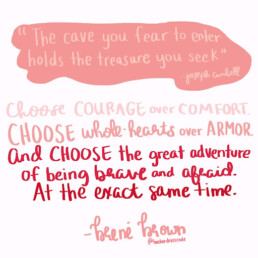
Being yourself is an act of courage. Being yourself is about owning your own power.
To reach the courage to be our full selves, we need to overcome the fear of being judged and of being criticised.
I was once told to reframe criticism as praise and this helped me to be self-empowered from the feedback.
When we are driven by the conviction of our values, when we are purposeful in our pursuit of our mission, when we are bringing our vision to life, the fear soon dissipates.
“You must never be fearful of what you are doing when it is right”.
Rosa Parks
Conviction in who we are, in what we do, in why we do it, reminds us, strengthens us and empowers us.
Self-empowerment becomes intuitive and instinctive when we listen to our gut.
A daily mantra, affirming who we are at our best sets us up for the day:
“You are braver than you believe, stronger than you seem, smarter than you think”.
Repeating our intent, out loud to ourselves in the shower, or whilst looking at ourselves in the mirror will deepen our sense of self-empowerment.
Reminding ourselves who we are, what we stand for, what we bring, whilst standing in the power pose will also turbo charge our sense of self-empowerment.
Your Narrative
Being self-empowered also means owning our stories.
We need to take control of our own narratives. If we do not do this then someone else will!
Life will throw stuff at us to test us. Each challenge will wound us, but it is our choice how long we let that pain linger for.
It is our choice if we let each challenge stop us, slow us down, or of we use it to empower us to carry on.
“She overcame everything that was meant to destroy her”.
Our scars tell the story of the battles we have fought to get to where we are.
Self-empowerment is sharing the journey as well as the destination.
Your Tribe
I am self-empowered but I am also empowered by others.
I have a team of supporters, champions and cheerleaders who hold me high.
Our network gives us strength.
“Behind every successful woman is a tribe of other successful women, who have her back”.
Our tribe hold the mirror up to remind us who we are.
Our tribe shine a light on us to amplify our achievements.
Our tribe celebrates our wins and our learning points.
Our tribe stands with us and gives us that leg up or that helping hand when we need it.
“We rise and shine by lifting others”.
Self-empowerment walks along side empowerment.
Empowering others is as rewarding as empowering ourselves.
Be the girl, be the woman, who gives others a hand.
Mentor, coach and sponsor.
Build others up, don’t break them down.
“Girls compete, women empower”.
I have worked with people who have seen competition as a threat and it has brought out the worst in them.
Competition makes us better, there is room for us all to flourish, for us all to rise.
Your Life
Life is too short to wait.
Take opportunities as they come to you – say Yes and work it out later.
Do what feels right and seek forgiveness after, rather than permission before.
“The question isn’t who is going to let me: it’s who is going to stop me”.
Ayn Rand
Be empowered to be yourself.
“A girl should be two things: who and what she wants”.
Coco Chanel
Empower others to be themselves too.
This Is How We Look When We Lead
Hannah Wilson
I have always been tall. Well above average in height shall we say. I come from ‘good stock’ it has often been said by family friends who are farmers – Dad is 6ft 1 and my Mum’s aunt is also 6ft too, so we have height on both sides of the family. But I am not just tall for a human – I am really tall for a woman. I tower over my female friends and some of my male friends too.
I can remember having friends who were taller than me at primary school and in Key Stage 3. I think I stopped growing around Year 9. My body hit pause, I was tall, but not exceptionally tall at this stage. Then something happened in Year 10. I shot up a few more inches. I became huge. A giant.
Being 6ft 1 when you are 14/15 and growing up in the 1990s in North Devon was hard when it came to clothes. I can remember the pain of clothes shopping as a teenager.
My younger sister, by 18 months, is a couple of inches shorter than me, and we have very different body shapes. I have always been curvy, carried a few extra pounds and am all leg (36 inches is my inside leg measurement!) whereas Pip is sportier in her physique and has a long back/ shorter legs. It meant that sharing clothes couldn’t really happen either. Saturday shopping trips for jeans or black trousers would often lead to arguments and tears.
My Mum is above average height at 5ft6 but she looks like a midget standing next to Dad, my sister and I. We often get comments when we are all together about how she gave birth to such giants. The human body is an amazing thing! My sister married someone taller than Dad so her family are all very leggy too and her teenager kids will soon tower over all of us. We definitely make an impact when we are all together, as you can’t really miss us as a family unit!
My height has helped me in my sports teams, I played netball, hockey and tennis for various teams at school, college, locally and then for university, often playing up a year due to my physical size. No, I don’t play basketball – a question I get asked a lot… So, my relationship with my height has been very much part of my relationship with myself, my friends, my partners and my career. After all I don’t know any different, there are some characteristics about our identity which we cannot change and whilst my weight has fluctuated, my hair colour has changed and my dress sense has evolved, my height has been a constant!
But how has my height shaped me as a leader?
I think I have probably taken my height for granted in many ways. Physically I know that I am very present. I am always visible – you can’t really hide when you are this height! I trained in tricky single sex boys’ schools and have always handled myself in busy corridors, playgrounds and have been known to separate many a fight. To be fair I just need to stand up as one of my behaviour management strategies. I know I have not had to work as hard as some of my smaller peers to establish myself, although I have also seen very tall men who are gentle giants who I have had to train and coach to be more present physically, to own their space so it is not always a given that if you are taller behaviour management is easier.
I was promoted early on in my career to Head of Year and I then became a Pastoral Middle Leader (the only female). I moved quickly onto SLT (I have served as the sole female on several male heavy leadership teams). I know my physique and my height, along with my loud voice and my confidence, have empowered me to hold my own. They have been an advantage in my career and perhaps, on reflection, I have experienced less bias than my petiter female friends, as a consequence. I think sometimes my male colleagues forget I am a woman in fact, as I can hold my own with the banter and handle myself with the jostling.
Being tall, leads to different choices about dress code too. I own heels, but I don’t need to wear heels. I used to wear them, and as my corridor stomp is well-known – colleagues and children would hear me before they could see me! But as I have been promoted, my work uniform has evolved and usually consists of a smartish dress with flat daps/ ballet shoes so I don’t suffer with sore feet, and so I can run around schools all day – as a school leader I was usually seen chasing a runaway down a corridor or up a stair case! When I worked under men who were shorter than me, I consciously wore flat shoes so as not to overpower them. They didn’t know this, but it was out of respect as I knew they had an invisible chip on their shoulders about their height. However, if they pissed me off, the next day I would come in wearing heels as symbolic gesture! I can remember at my second school I had a friend who had the same stature as me, our Headteacher was a small irritating man. The two of us were a tag team and would walk a corridor either side of him, hemming him in, if we needed to challenge anything.
So, my height has served me well as a leader, it has empowered me to be visible, to be present and to manage behaviour. Moreover, it has enabled me to hold my own as a woman in a male heavy space. Being tall has served my professional life well as it makes teaching and leading easier, whereas in my personal life it has been more problematic, but that’s a different story!
Some days I do feel like Gulliver in Lilliput. Travelling to Singapore in my 20s with a university friend, I felt like I was in a circus freak show. And, really, I should be rich for the number of times I have been asked “what’s the weather like up there?” Most of the time I can laugh it off, and after a few drinks in a bar if I get a “big lass” comment they usually get a retort along the lines of “rude git”. It is in those moments where you catch your reflection when you are standing next to a smaller colleague or you see a group picture and you are towering above everyone else that remind you that you stand out. It could make me self-conscious, and perhaps it did when I was younger, but I have worked through that and accepted myself for who I am.
I would say that my relationship with my weight has been less positive. Being tall and carrying weight is a double whammy. At school as a child I was bullied by a group of bitchy girls who called me BFG (“Big F***ing Ginger”) and the worse thing I have been called by a kid is a “Fat Bitch”. Although I think my retort at the time was: “whilst I might be fat, I am far from a bitch!” It has taken me longer to find peace with my body shape, my curves, and my weight. I don’t think my weight has impacted my leadership though. It is just who I am, I am comfortable in my skin and I have a strong sense of self. As a teacher and as a leader I have supported a lot of students struggling with their self-identity and their body image. I know I was lucky to have a strong family support network, so my self-esteem and self-confidence have always been high.
As for my hair colour, we were ginger when we were growing up, so my sister and I were on the receiving end of all of the schoolyard taunts. My sister fared it worse than me as she has curly hair too. The jibes cut her a lot deeper than they did me. I have always had thicker skin than her, and in defending her, I learnt to accept myself, I think.
When I went to university, I started to dye my hair and lost the ginger hues, and as I have aged, my hair has become naturally darker. Women don’t tend to comment on other women’s hair colour but some of the male leaders I have worked with, especially those who were threatened by me, did make comments about me being a feisty redhead, so I guess I have had to navigate some of the stereotypes that come with that too. I can remember watching an episode of Graham Norton and he had a couch of stunning redheads on it, and Julianne Moore shared her fascination with the British slurs for being a ‘ginga’ whereas in the US redheads are seen as being exotic. An interesting change in lens on what we value about differences in how we look.
Personal identity is interwoven with professional identity. Our leadership self is a fusion of how we look and how we behave, with what we know and what we create. Being myself, being authentic – being a tall, curvy, ginger – is who I am. I accept that, I own that, I am proud of that.
Authenticity
Hannah Wilson
Authenticity is about presence, living in the moment with conviction and confidence and staying true to yourself. Authentic is defined as: “not false or copied; genuine; real” and can also be described as “representing one’s true nature or beliefs; true to oneself or to the person identified.”
Authenticity is something I think, talk, read and listen about a lot. It is a word I mull over and explore. I have blogged about it, spoken about it at events and built it into training I have designed and led.
I don’t know what my parents put in my porridge when I was growing up but since I was a teen I have been stubbornly authentic. I describe myself as Marmite, I don’t evoke neutral responses, you either love me or you hate me, and I am fine with that.
There is a distinction between being liked and being respected at work, I care about being respected for my personal and professional integrity, I don’t need to be liked by others for my own sense of self-worth as I like myself. I am self-assured about my own worth. I self-validate who I am.
I am conscious that others do not have the self-confidence and high self-esteem that I have and that they want to work on it and nurture it. I am also acutely self-aware that confidence can be interpreted as arrogance if it becomes too amplified. It is a fine balancing act between being confident, being humble and being true to yourself.
A thought leader you cannot avoid when you are reading about what it means to live an authentic life and what it means to be your authentic self is the brilliant Brene Brown:
“To be authentic, we must cultivate the courage to be imperfect – and vulnerable. We have to believe that we are fundamentally worth of love and acceptance, just as we are. I’ve learned that there is no better way to invite grace, gratitude and joy into our lives than by mindfully practising authenticity”.
Brene Brown
This quote is so rich and dense with our values I am going to unpack each one she mentions, ironically we have already explored a lot of them as part of our #DailyWritingChallenge values journey over the last 7 weeks as we use the social isolation time to look inwards:
- Courage: being yourself means digging deep and revealing the real you, your whole self and not being a chameleon who transforms into the person other people want or expect to see.
- Perfection: once we recognise and accept that we are all flawed, we can stop comparing ourselves and we can manage our inner critic, slowly turning the volume down on the negative self-talk.
- Vulnerability: removing the mask, exposing our hearts and souls, lets others see the real us, our core, this can feel scary but it is also very empowering.
- Self-belief: our confidence is worn on the outside, our self-esteem is how we feel on the inside, we need to have the conviction to believe in our skills, qualities and strengths, we need to know the value that we can bring.
- Self-love: we all want to be loved, but we need to first seek that love from within, rather from outside, if you love yourself, including the imperfections, then the wall comes down to welcome others to do the same.
- Acceptance: the word tolerance is used a lot these days, but no-one wants to be tolerated, as there is a sense of people having to put up with something or someone, we all seek a sense of belonging, we all want to be seen and heard, we all need to be accepted.
- Grace: this is the one I grapple with in this context, I don’t see myself as being physically graceful, I think this is because I am tall/ big, and have always been teased for being clumsy, but my actions and attitude can be graceful, I can honour myself and others.
- Gratitude: we have lots to be grateful for and we can often forget this, we can appreciate the external things, the material goods, but we also need to practise being grateful for the things that are intangible, the qualities we have nurtured over time, the the things that make us unique.
- Joy: our personal fulfilment, our sense of satisfaction and our joy in being alive, in being ourselves, is amplified when we are comfortable in our own skin and we surround ourselves with people who celebrate our authentic selves.
- Mindfulness: being mindful is another quality I am nurturing, I am empathetic and compassionate to others, I am emotionally intelligent, yet I am candid, direct and can be harsh with my words as I give feedback at times, I am practising how to be mindful in how I gift advice.
I think the verb choice is important in this quote: to cultivate, to believe, to learn, to invite, to practise. Each of these behaviours and actions are conscious and intentional, they are about transformation over time.
In my peer support coaching circles over the last 7 weeks we have talked a lot about things we are consciously embracing, things we are intentionally letting go of, we have focused time and attention on nourishing ourselves through daily practices that serve us.
One such daily ritual that I recommend is the self-empowerment from the practice of Daily Affirmations.
Affirmations are a powerful way to improve your mindset on a daily basis, and research on The Psychology of Change: Self-Affirmation and Social Psychological Intervention has shown that they can increase our feelings of self-worth. Affirmations are positive reminders or statements that can be used to encourage and motivate yourself or others. Often it’s a lot easier to affirm others than it is ourselves, but we need to remember to encourage ourselves as well.
Here is an example of an affirmation you could say with conviction to yourself each morning in the mirror until you believe it. It is the verbal Power Pose to shape your mindset of how you feel about yourself:
I give myself permission to do what is right for me.
I allow myself to be who I am without judgment.
I give myself space to grow and learn.
I listen to my intuition and trust my inner guide.
I trust that I am on the right path.
Being your authentic self is liberating and empowering. I highly recommend it as your time and energy can then be invested as a resource to serve your purpose.
Authenticity for me is:
- Being true to yourself;
- Thinking inwardly, looking outwardly;
- Treating others with respect and kindness;
- Living in the moment;
- Listening with an open mind.
Soulful Leadership
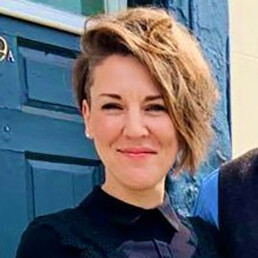
Kate Smith
Kate Smith is the Network Leader and Coach for HeadsUp4HTs.
What do Soulful Leaders look like?
Soulful Leaders shine! These are the leaders whose presence and energy is felt, even when they aren’t in the room with you. They not only have a compelling and values-driven mission, they have an abundance of self awareness and the power to nourish themselves, and others, to be the best that they can be.
Soulful Leaders have the ability to harness their own wisdom and internal resources, including their emotional and spiritual intelligence, to navigate challenging contexts without losing themselves, their values and their authenticity in the process. Soulful Leaders know not only the power of being vulnerable, but they have the experience and the emotional intelligence to know when, and with who to be vulnerable with. A Soulful Leader, therefore, has a values aligned network around them, they are not an island.
What do Soulful Leaders do?
Soulful Leaders have a captivating leadership presence; their behaviour and actions support their own belief systems and values. They aren’t afraid to fight for what’s right, consistently evaluating their motives to ensure they align with their ethical code. They trust their inner compass. Soulful Leaders are at peace with the decisions they make because they are creative decision makers who carve out time to reflect on their experiences, evaluating them robustly so that they are always moving their teams forwards. They rest their heads on their pillows at night knowing they did their best and that what they did was right, not what was easy or expected. They have learned not to be afraid of change, because they know that change leads to new beginnings. You’ll find Soulful Leaders doing the inner work; reflecting, being intentional about their own wellbeing and eliminating distractions and negativity so that they can nourish themselves and nurture their teams and communities too.
What has been your experience of Soulful Leadership?
I strived to be a Soulful Leader in my role as a Headteacher and now as a network leader and coach. Integrity, self awareness, connection and authenticity are the core values underpinning my ethical leadership and soul mission. Part of my journey has been to work on my own Ikigai; my core purpose. This beautiful journey began after transitioning from Headship and into freelance coaching and consultancy in 2020. I continue to work on my ‘raison d’etre’, by recognising what it is that I am good at, what brings me joy, and what my community and clients need. After all, leadership is about taking people on a journey to a better place. This is no mean feat when you work in a particularly tumultuous and challenging system like the UK education system. There have been many times when I’ve felt my own values have been challenged or compromised, but being a soulful leader, I am deeply ambitious about being able to bring my authentic self to the table; my whole self with all the courage and vulnerability I can harness! With that comes the gracious ability to admit when things haven’t worked out or when I was out-right wrong! In essence, I believe Soulful Leadership is about developing our inner authority as a leader through raising awareness levels of ourselves holistically, and in others.
How relevant is it to be a Soulful leader today?
Entirely relevant and completely essential! The education sector in particular needs leaders, not managers, who can unify a community and lead with integrity, without becoming compliant and disconnected. Teams and communities thrive when there is harmony, and Soulful Leaders strive to provide the conditions where everyone, including themselves, can thrive and belong. As leaders, we have a responsibility to consider the social, emotional and environmental impact of our leadership on others and our environment. Soulful Leaders do this organically because of their strong moral compass and ethical values.
The Woman in the Arena
It is not the critic who counts; not the man who points out how the strong woman stumbles, or where the doer of deeds could have done them better. The credit belongs to the woman who is actually in the arena, whose face is marred by dust and sweat and blood; who strives valiantly; who errs, who comes short again and again, because there is no effort without error and shortcoming; but who does actually strive to do the deeds; who knows great enthusiasms, the great devotions; who spends herself in a worthy cause; who at the best knows in the end the triumph of high achievement, and who at the worst, if she fails, at least fails while daring greatly, so that her place shall never be with those cold and timid souls who neither know victory nor defeat.
Nancy LeTourneau, modifying Men in the Arena, Theodore Roosevelt
Soulful Leadership
Hannah Wilson
Soulful leadership is when we lead with authenticity and awareness. It is purposeful and it is conscious. We lead with integrity, from our values. Leading from the soul requires heightened levels of awareness of self and of others.
Leading from our soul, leading from within. Our soul seeks to connect with our purpose, to enable us to be in service. We connect with our Ikigai to find alignment with what we value, who we value and how we add value.
Soulful leadership is when we develop and balance our resilient leadership skills with our soul purpose as an authentic leader. We have clarity of our own vision, mission and values, empowering us to lead authentically.
We have a deep understanding of ‘what we do’ as well as ‘who we really are’ as a leader. We are at peace with the decisions we make, we have clarity of direction on how we want our team to move forwards and we own our unique leadership style. We show up as values-based leaders, embracing the courage to reveal our vulnerability in order to lead with purpose.
Leading with head, heart and soul engaged enables us to lead with confidence and conviction. A soulful leader fosters the development of the culture, and the development of others, to create an environment where people can thrive and be the best version of themselves as leaders. Soulful leaders show that there is another way, they give permission to others to break the mould.
When we lead with soul, we are thoughtful, we listen, we nurture others and we model there is a different way to lead. By leading with authenticity, integrity and empathy we strengthen our relationships with others and deepen our resonance with our core purpose. Our Ikigai is aligned and activated, we are thus able to create legacy.
Leading from our soul is an awakening and a reimagining of traditional leadership as we show that leading with empathy, compassion and ethical values can improve the wellbeing and productivity of our team.
Some of the tools that help us connect with our soulful leader within include:
- a journal to deepen our reflective practice
- a revisiting on our values to tap into our moral compass
- a focus on our Ikigai to get clear on our purpose
- a mantra to guide us through different leadership decisions
- a gratitude practice to affirm our progress
- a coaching relationship to challenge us on our limiting beliefs
Leaders Can be Both Compassionate and Strong
One of the criticisms I’ve faced over the years is that I’m not aggressive enough or assertive enough, or maybe somehow, because I’m empathetic, it means I’m weak. I totally rebel against that. I refuse to believe that you cannot be both compassionate and strong.